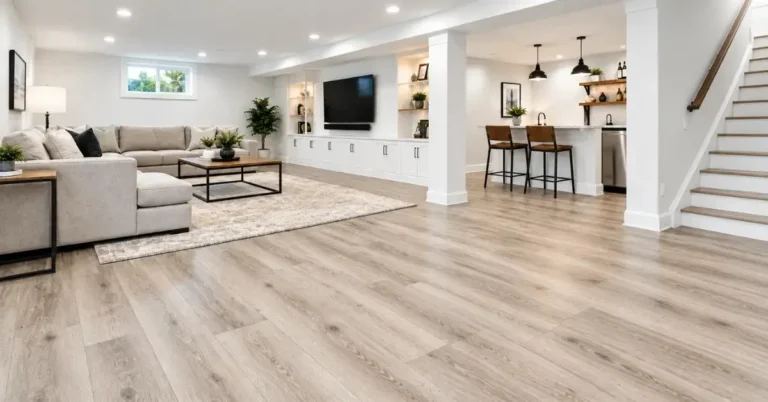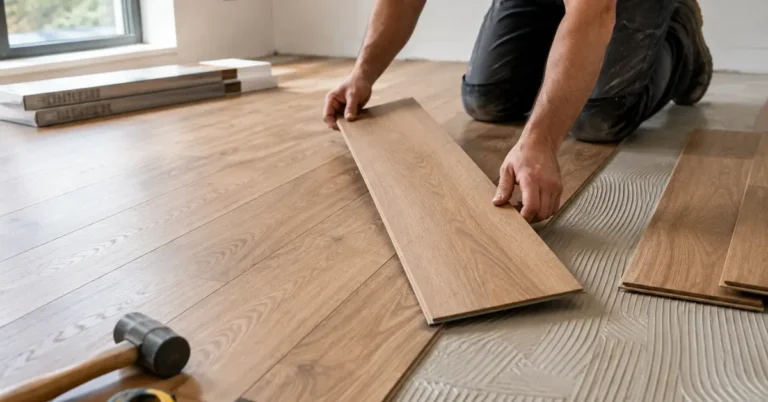

The best flooring for basement in NJ depends on moisture conditions, intended use, and proper subfloor preparation. Many choices fit different basement needs; for flexibility, consider rigid core luxury vinyl; for tough surfaces, porcelain tile; and for strength and economy, epoxy or polished concrete.
A finished basement will give your family somewhere to relax, somewhere to work, somewhere to exercise, or somewhere to have guests sleep over – and that’s not going to take up any extra space in your home whatsoever. But when it comes to basements, that’s precisely where the floor falls. If not, you may end up with warped floors and carpet stains.
This article explains why basement floors fail, which materials can withstand a basement’s harsh environment, and how to choose the right flooring for your basement remodeling project in New Jersey.
Why Basement Floors Fail
Many basement floor problems revolve around moisture, but some are surprising.
- Moisture vapor coming up from below. Concrete is porous. Moisture vapor can pass through what looks like a dry concrete floor and get trapped beneath a flooring material that doesn’t let the vapor escape.
- Condensation. In the summertime, moisture-laden air contacts the cold concrete basement floor and turns to liquid. This is a common problem during New Jersey’s humid summers.
- Floods and Seepage. Storm conditions, clogged drainage systems, poor property grading, or even a sump pump failure can flood the basement. Stone or brick-walled basements tend to be more vulnerable than concrete basements.
- Humidity. Humidity alone, without moisture, can be enough to develop mold in organic materials like wood, paper-faced material, and carpet padding.
Knowing which of these is the problem in your basement will be more useful when choosing the right flooring than seeing display floors.
Waterproof vs. Water-Resistant Basement Floors
To choose a product, you should understand two key terms.
A water-resistant floor can handle some splashing and wetness, as long as you clean it up immediately; otherwise, it can swell and get damaged.
Waterproof flooring for basements stays intact even when wet. It won’t dissolve; however, water can still get through the floor between the joints.
Waterproofing is preferable for basements in New Jersey. Water-resistant floors pertain only to dry basements.
Top Flooring Options for New Jersey Basements
Rigid-Core Luxury Vinyl
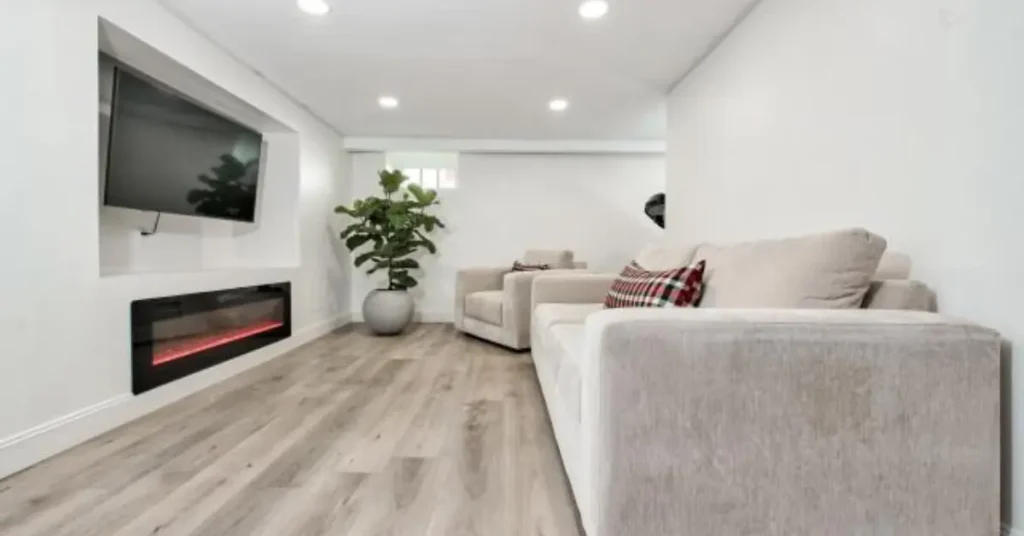
Rigid-core vinyl – also called SPC or WPC – is the popular choice for finished basements.choice today. It offers good moisture resistance, durability, and a variety of wood-look designs. However, homeowners should check the manufacturer’s installation requirements and ensure the concrete slab is properly prepared before installation. Professional flooring installation services can help ensure proper subfloor preparation and long-lasting results.
Be sure to read the fine print; ratings vary based on moisture exposure.
Conclusion: An excellent all-purpose choice for rooms used for sleeping, working, and playing.
Porcelain and Ceramic Tile
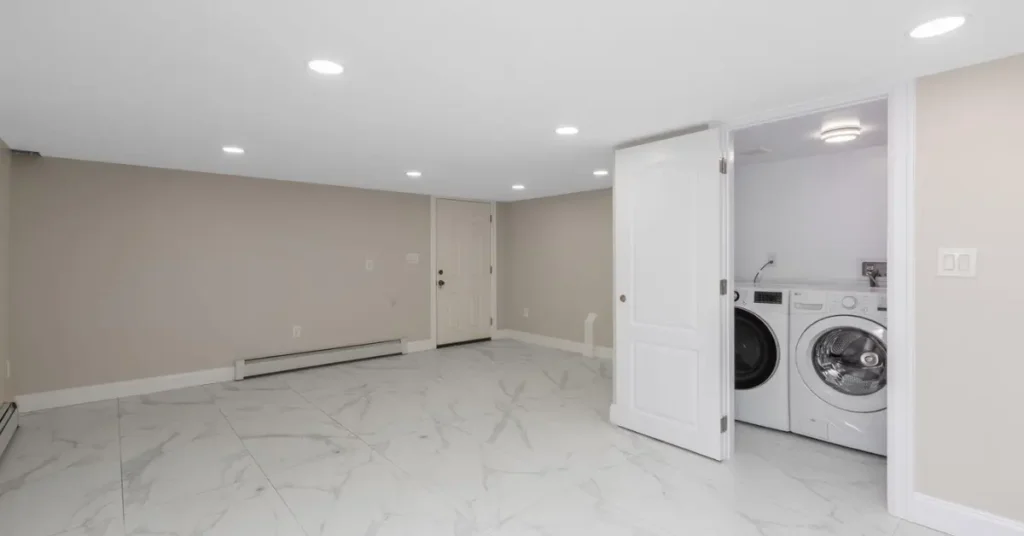
Tiles are not afraid of moisture. Tiles like porcelain are dense and waterproof, so they can easily withstand leaks and floods. The porcelain plank tiles are not only appealing but also functional.
The disadvantages of tiles include discomfort and installation. Tiles are cold, hard, and require a level surface for installation. On the other hand, an underfloor heating system can overcome this disadvantage.
Conclusion: The top pick for basement bathrooms, laundry rooms, and areas with a history of water.
Epoxy and Polished Concrete
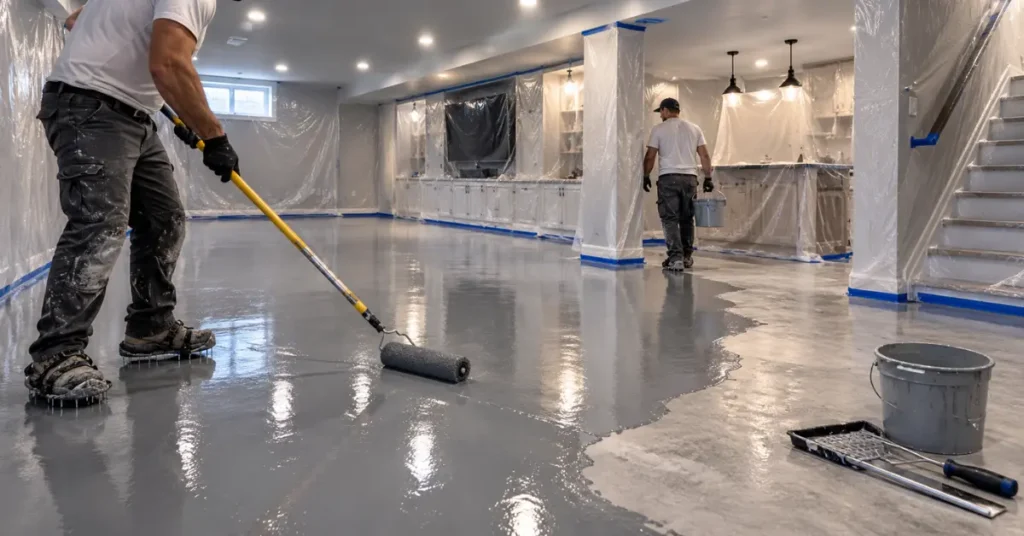
The slab in itself shall make up the finished floor. Polished, stained, and sealed concrete provides a modern, sleek floor surface, while epoxy paints are spill-proof, stain-proof, and chemical-resistant.
Conclusion: Cost-effective option for gyms, garages, workshops, and modern designs.
Waterproof Laminate
Traditional laminate isn’t meant for basements because it expands when wet. Waterproof laminate is a new generation of laminate that incorporates a better base and waterproof edges.
Read the fine print, as it varies depending on the level of moisture exposure.
Verdict: A good choice for basements with no moisture.
Engineered Hardwood
Wood floors are very flexible with moisture and therefore unsuitable for basements in general.
Engineered hardwood consists of wood bonded with another stable material and is more flexible, but it works properly only when certain conditions are met. Homeowners can also consider the hardwood flooring installation cost before making a decision.
It is not water-resistant and must be laid on dry concrete with waterproofing and humidity control.
Conclusion: Best suited for those who like natural wood and can control moisture.
Carpet Tiles and Rubber Floors
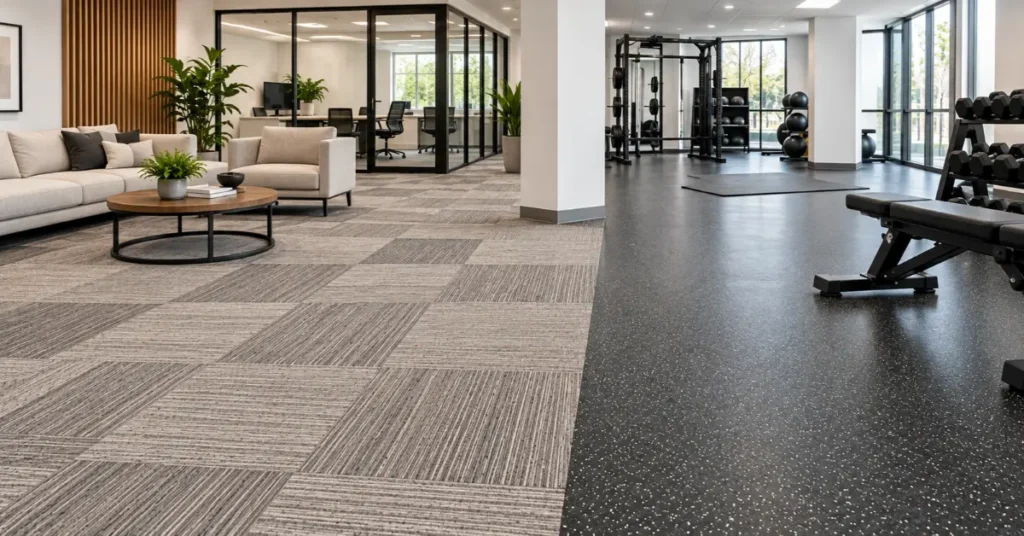
Carpet tiles are soft, noise-masking floors that work well in media rooms and playrooms and can also be cleaned after spills. For home gyms, rubber floors are suitable because of their water resistance and cushioning.
Conclusion: Unique materials for unique rooms.
Choosing by Basement Condition
Choosing the right basement flooring is easy if one is realistic about it.
- Dry basement. Lots of options work, such as engineered wood, waterproof laminate, and carpet tiles, as long as you have a vapor barrier.
- Slightly damp basement. Rigid-core vinyl flooring, tile, or concrete floors are a choice, along with a working dehumidifier during summertime.
- History of water presence. Porcelain tiles or epoxy-coated concrete floors are good choices, as both can be washed and dried after new water damage and do not support mold growth.
If you’re unsure which option is right for your basement, a plastic-sheet test may help. You can also explore basement ceiling ideas when planning your overall basement renovation.
Budgeting for Your Best Flooring for Basement in NJ
This will vary depending on the size, condition of the slab, and type of flooring. This means the only way to get an estimate is through an on-site inspection. Nonetheless, some trends are worth noting when considering flooring installation cost.
For instance, a ready-made concrete floor is relatively cheaper, provided the slab is in good condition. Next comes rigid-core vinyl flooring and waterproof laminate. Porcelain tiles and hardwood come next in cost.
But preparations are sometimes as important as the floor. Leveling, crack sealing, vapor barrier, and subflooring add costs but save your investment. Using waterproof flooring instead of water-resistant basement flooring saves you money.
Installation Details That Make or Break the Floor
Even the most suitable basement flooring material will be unsuitable if you don’t prepare it properly before installation.
That’s when you need to ensure your substrate is clean, even, and dry.
Make sure you have a vapor barrier or underlayment along with your floating floor. Also, ensure the subfloor panels have dimples on the underside for proper ventilation and insulation.
Add the vapor barrier or underlayment under the floating floor. In addition, add subfloor panels with dimples on the underside for ventilation and insulation.
Maintaining Basement Floor
Turn on your dehumidifier during the rainy season to maintain consistent humidity levels, and clean up any spills, even if your floor is waterproof. Prepare your sump pump for the rainy season.
Things to avoid
- Laying flooring before patching any leaks
- Using materials that are not meant for sub-grade application
- Failing to test for moisture because the slab “seems” dry
- Installing wall-to-wall carpet with cushion pad in the damp basement
- Ignoring the effect of humidity after finishing the work
Why Work With New Jersey Home Remodeling
New Jersey Home Remodeling provides Best Flooring for Basement in Nj services, including hardwood, vinyl, and tile, with the same team that designs and installs your basement flooring. The team has worked for over 16 years, completed more than 600 projects, and knows how basements in the area work, preparing each slab to meet the requirements.